Loading...
Loading...
Beneath the surface lies the strategy.
From iron ore dominance to critical mineral diversification.
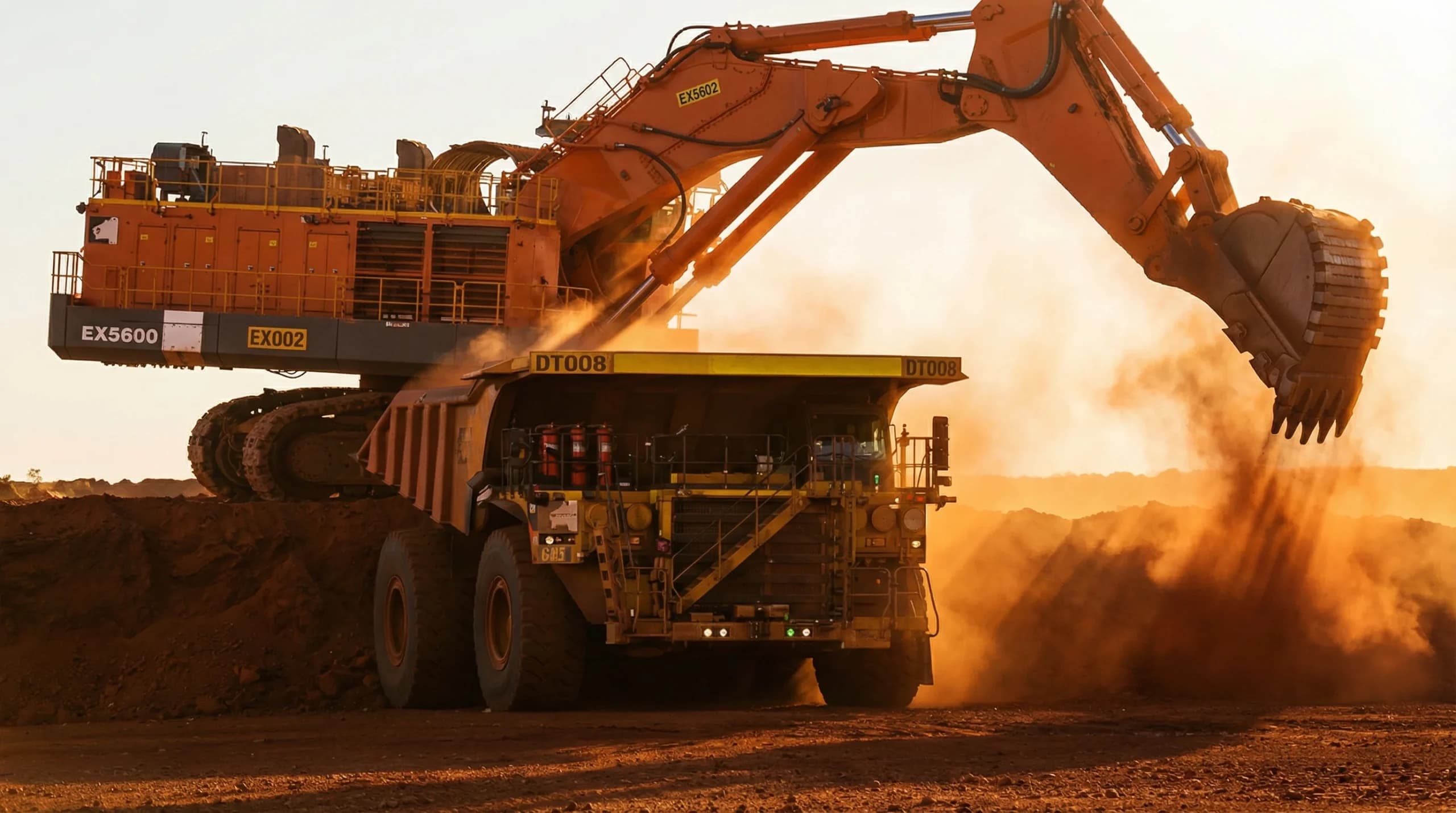
Mauritania holds some of the world's highest-grade iron ore deposits, produces over 15 million tonnes annually, and sits above significant gold, copper, phosphate, and rare earth potential. The question is not whether the resource is there — it is who is positioned when the next development cycle begins.
In this exclusive interview with Mauritania Gateway, Veten Abdouly, President of Abdouly Holding, shares the vision and achievements of one of Mauritania's most dynamic industrial groups.
Founded in 2020, this 100% national company is a leader in modular construction, logistics, mining supply, catering, and digital solutions. With key partnerships including SNIM and Kinross Tasiast, and a $10M mega-project on the horizon, Abdouly Holding is blending local expertise with international standards to drive Mauritania's economic future.
Iron ore has anchored Mauritania's economy for over six decades, contributing 35% of export revenue and forming the backbone of its industrial infrastructure. Yet the sector is at an inflection: SNIM is undergoing its most significant modernization in a generation, global demand for critical minerals is reshaping exploration priorities, and the country's underexplored mineral estate is attracting serious international capital for the first time.
The companies that establish structured ecosystem positions now — before the next licensing cycle, before the next infrastructure development tender, before the next operator enters — will compete on fundamentally different terms than those who arrive later.
The structural insight: Mauritania's mining sector is not transitioning from boom to bust — it is transitioning from a single-commodity economy to a diversified mineral economy. That transition creates the widest window of strategic opportunity in the sector's history.
Click on a company logo to discover its role in shaping Mauritania's mining landscape.
Mauritania's subsoil is among the most mineral-rich in West Africa — yet a significant portion remains in early-stage exploration or pre-development. The ecosystem tracks each mineral class with dedicated intelligence, actor mapping, and development timeline monitoring.
The foundation of the Mauritanian mining sector. SNIM's Zouerate complex is undergoing a major capacity and efficiency upgrade — creating procurement, services, and logistics opportunities worth hundreds of millions over the program cycle.
Tasiast, operated by Kinross, is one of West Africa's largest gold mines. Beyond Tasiast, 12+ gold prospects are under active exploration — with new licenses issued in 2023–2025 to a mix of junior and mid-tier international operators.
The Guelb Moghrein copper-gold deposit at Akjoujt is a multi-decade resource. Associated cobalt by-product is increasingly significant in a global critical minerals context. A $340M processing capacity gap represents a structured investment opportunity.
The Bofal phosphate deposit holds 1.7 billion tonnes of identified reserves — one of West Africa's largest. Global food security dynamics and fertilizer market pressures are accelerating development interest. Infrastructure connection is the primary development bottleneck.
Reconnaissance surveys have identified REE anomalies in northern Mauritania's Precambrian shield. With global supply chains under geopolitical pressure, sovereign capital from the EU, Japan, and the US is actively seeking African REE supply security — creating early-mover advantage for positioned actors.
Coastal beach placer deposits yield titanium-zircon concentrates for export to industrial markets. Gypsum production at 1.8 Mt/year serves both domestic construction and international export — a stable, lower-profile revenue stream underpinning sector diversification.
The Mining Ecosystem structures engagement across the full mineral value chain — from geological reconnaissance to downstream processing and export logistics. Each node is a discrete commercial opportunity. Knowing where the gaps are — and who holds which positions — is the intelligence advantage.
Geological surveys, drilling, resource estimation, feasibility studies
Mine development, open-pit & underground operations, tailings management
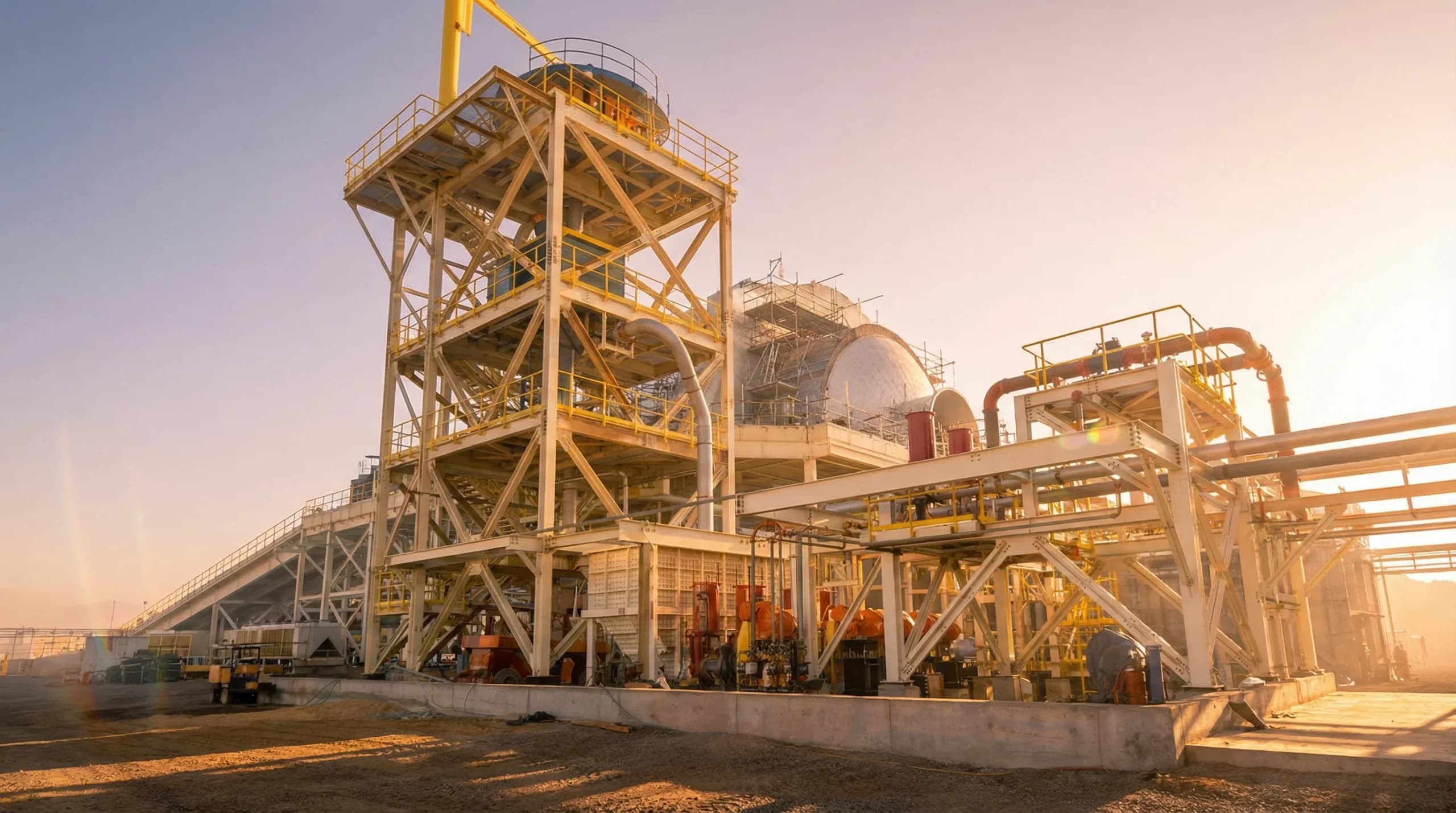
Beneficiation, concentration, smelting, refining to export grade
Rail corridors, port handling, storage, export shipping infrastructure
Engineering, maintenance, safety, catering, equipment supply, workforce
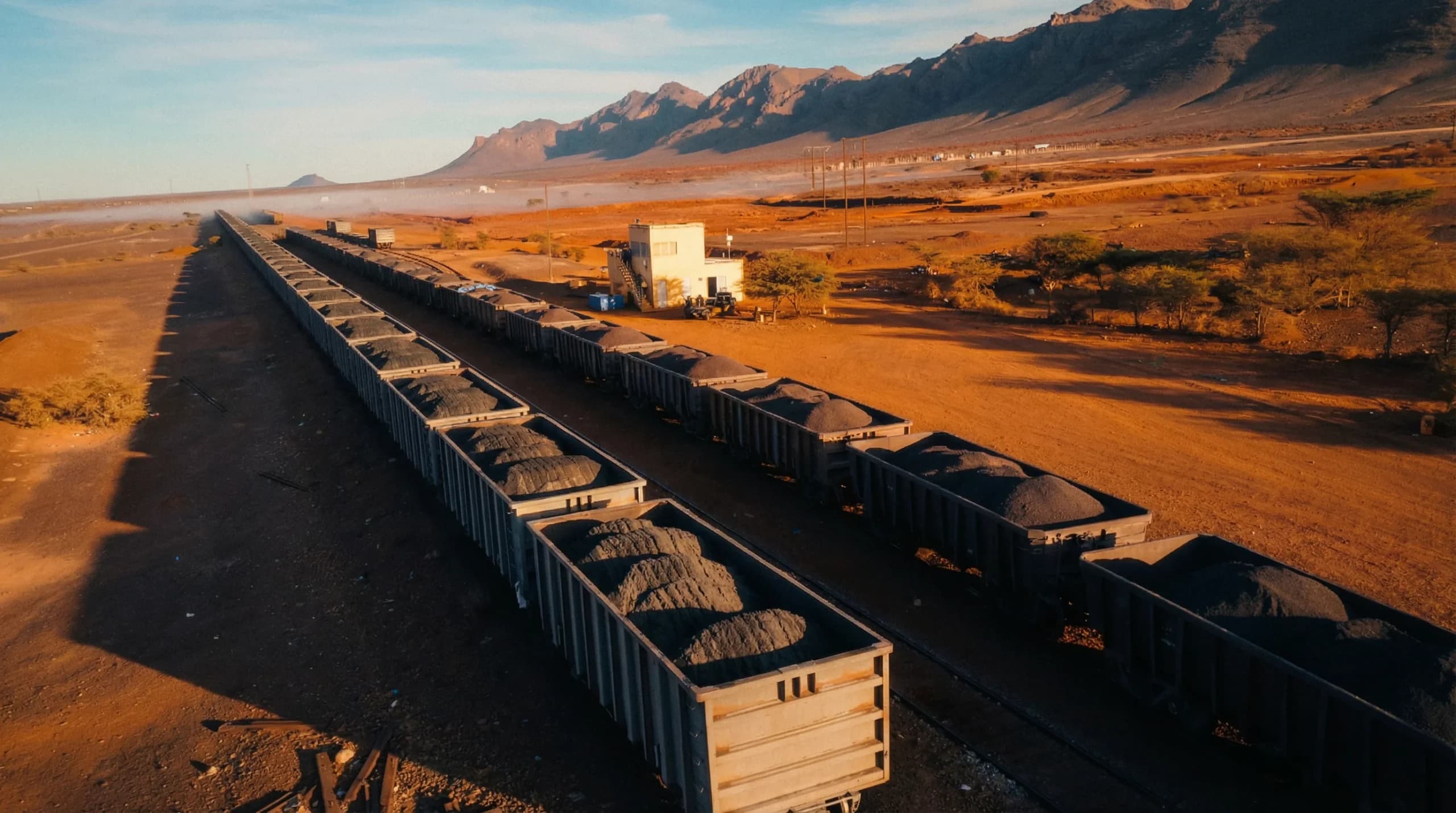
Mauritania's mining infrastructure is a distinct investment class in its own right. The SNIM railway is one of the longest ore-hauling railways in the world. Port Nouadhibou handles over 12 Mt of iron ore annually. Both require significant upgrade investment to support the sector's next production phase...
One of the world's longest ore trains. 704km corridor requiring modernization of track, rolling stock, and control systems...
Primary iron ore export terminal. Handling capacity upgrade to 25 Mt/yr underway. New berths and stockyard automation required...
Diesel dependency at remote mine sites creates cost and sustainability pressure. Solar-hybrid and grid connection programs underway...
Phosphate (Bofal), emerging gold corridors, and northern exploration zones require road infrastructure investment to become commercially viable...
The ecosystem is being built around these moments.
The initial cohort of validated sector members is being confirmed...
SNIM's $800M expansion program enters active procurement for Phase 1...
The Ministry of Mines is expected to open the next exploration licensing round...
The inaugural closed-door strategic session for validated mining ecosystem members...
The Mining Ecosystem maps commercial opportunities across four domains...
The $800M SNIM expansion creates the largest single procurement opportunity...
60+ active licenses and a new round opening in 2026 create entry points...
A $340M identified processing capacity gap...
Mauritanian mining projects are chronically undercapitalized...
The Mining Ecosystem follows the same validated membership framework...
Initiate Validation ProcessEvery mining ecosystem member is reviewed for sector fit...
Confirmed members receive structured briefs on SNIM developments...
Mining members benefit from cross-sector intelligence with the Energy Ecosystem...
All member intelligence, sector briefs, and Market Notes are accessible exclusively...
Mauritania's next mining development cycle is forming. The actors who establish ecosystem positions now... will compete on fundamentally better terms.
Companies active in Mauritania's mining ecosystem, validated through the Gateway framework.

A Mauritanian group operating in mining, oil, construction, logistics, and IT — one of the most diversified national conglomerates.
View Company Profile