Loading...
Loading...
Mauritania's
— Structuring the landscape. Positioning the actors.
Mauritania has moved from energy scarcity to energy abundance in under a decade. With 142 TCF of proven gas reserves, a renewable energy potential among the highest on earth, and a $22B+ project pipeline accelerating toward production — the structural window is open, and the time to position is now.
GTA · BirAllah · Deepwater
Offshore Gas: from discovery to production cycle
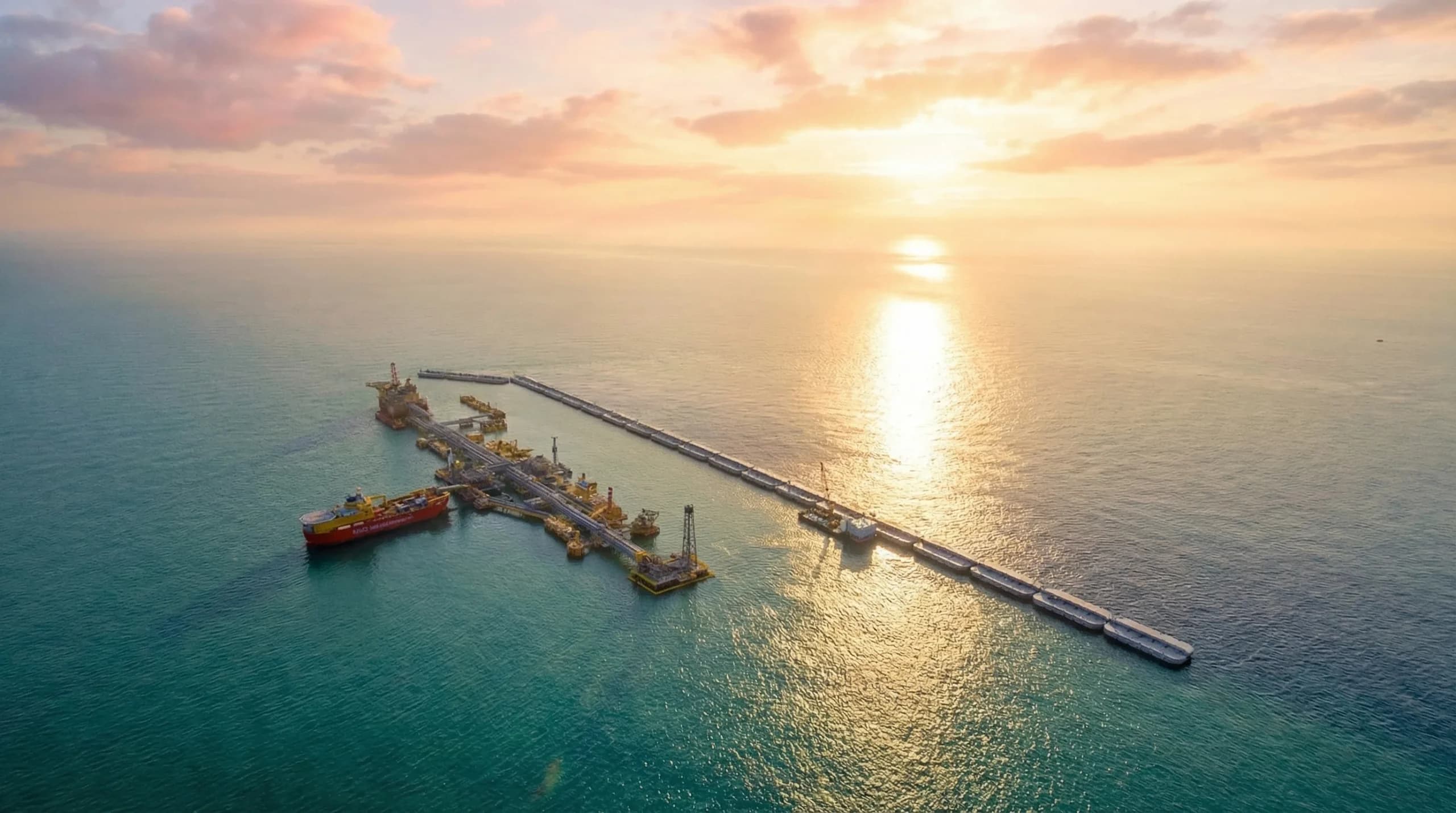
The Greater Tortue Ahmeyim (GTA) LNG project — a joint development between Mauritania and Senegal — is reaching first gas production, marking one of the most significant energy milestones in West Africa in a decade. Operated by BP with PETROSEN and SMH, GTA Phase 1 targets 2.5 MTPA of LNG for export. The deeper prize is BirAllah: an estimated 50 TCF+ of gas reserves in Block C8, representing one of the largest undeveloped offshore gas fields in the world — awaiting final development decisions as the region's energy infrastructure matures.
Export potential · H₂ diplomacy
Green Hydrogen: Mauritania's next energy leap
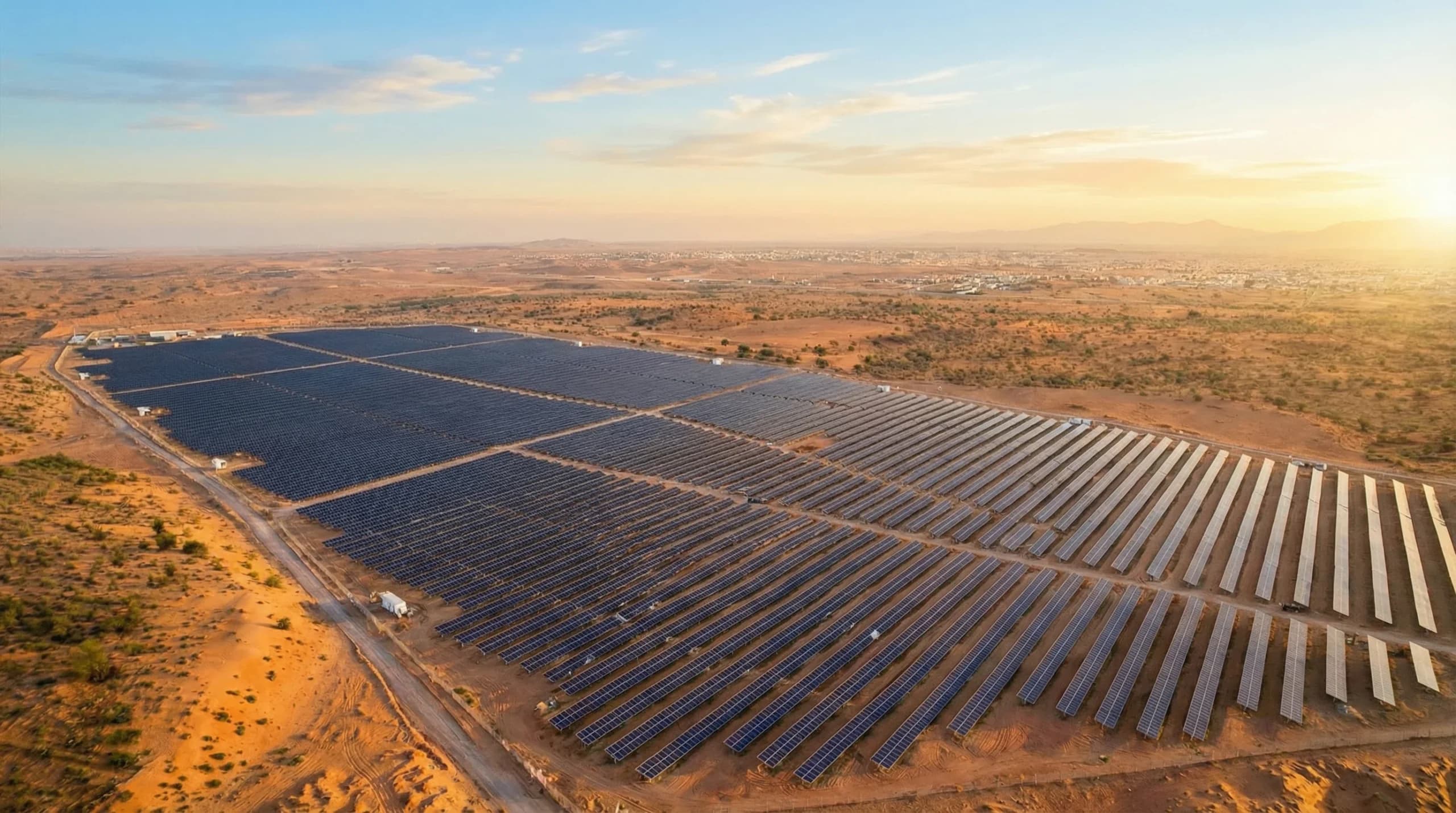
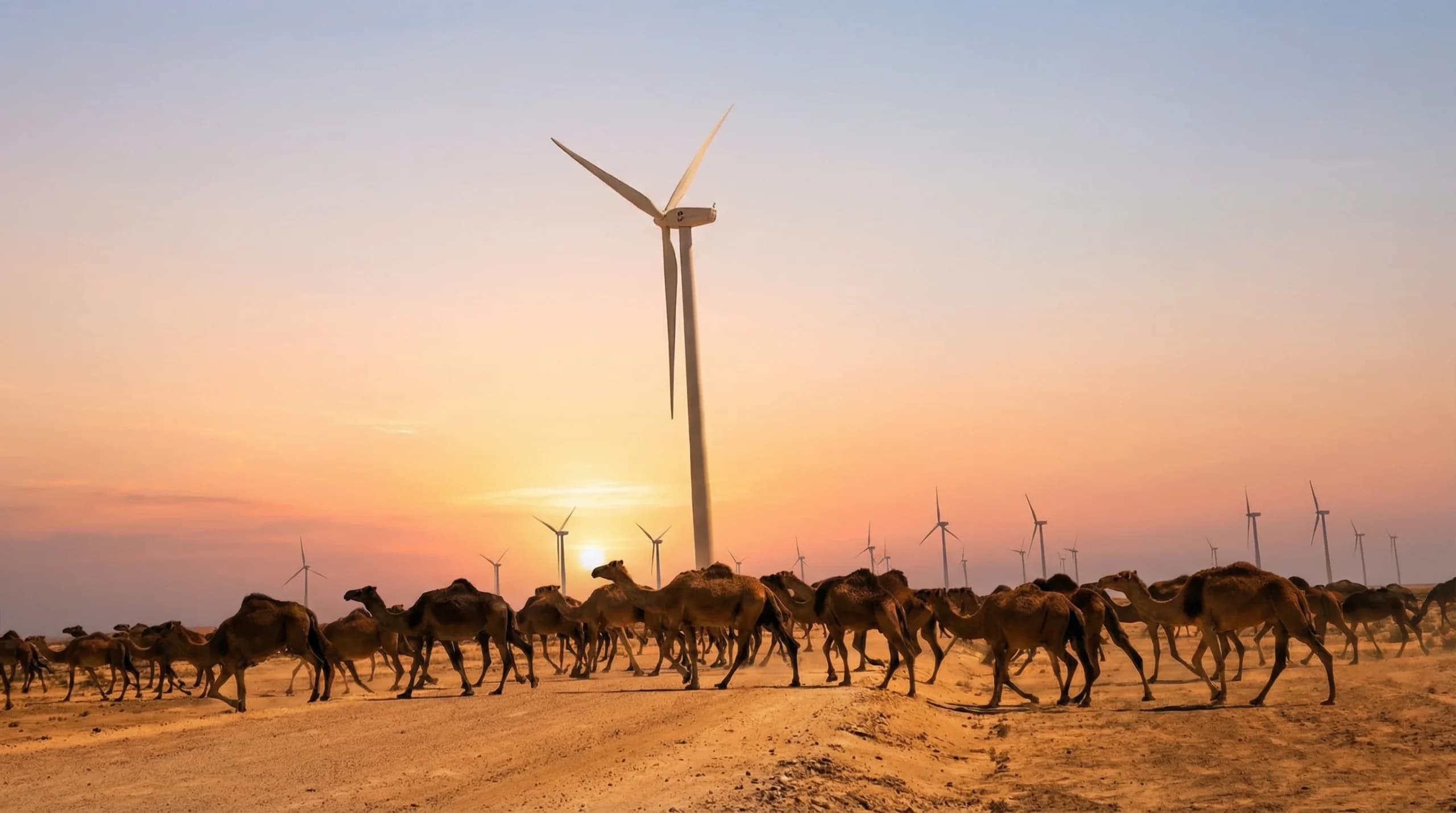
Mauritania's combination of world-class solar irradiation (over 2,800 kWh/m²/year), strong Atlantic wind resources, and vast available land positions it among the most competitive future producers of green hydrogen globally. The government has approved a national hydrogen strategy and several major projects are in pre-FEED or feasibility phase, attracting European sovereign capital seeking clean energy security post-2030. CWP Global's 30 GW Aman Project and Chariot's Nour project represent the leading developments currently in structured engagement with the ecosystem.
Domestic · Regional · Logistics
Grid & Infrastructure: the backbone of energy monetization
Mauritania's domestic electricity access rate remains below 50% — one of the most significant energy infrastructure development opportunities in West Africa. The national utility SOMELEC is undergoing a transformation supported by the World Bank and African Development Bank, with a major grid expansion program underway. Simultaneously, Mauritania is positioning as a regional power export hub through the OMVS interconnection and planned WAPP connections, with renewable energy capacity providing competitive low-cost generation that can serve neighboring markets.
Procurement · Services · Capacity
Supply Chain & Local Content: the structural opportunity
Mauritanian authorities are implementing progressive local content requirements across all energy developments — mirroring successful frameworks from Ghana, Senegal, and Angola. For international companies, early registration as a local content partner or joint-venture participant delivers procurement priority, regulatory goodwill, and competitive differentiation. For Mauritanian companies, structured ecosystem positioning is the mechanism to participate meaningfully in supply chains that are otherwise difficult to access without established credibility and visibility to project operators.
Delivering integrated oil, gas, and mining solutions in Mauritania with proven expertise across the full project lifecycle.
Established Mauritanian consulting organization (since 1999)
Specialized in Oil & Gas and Mining sectors
Expertise from feasibility studies to project execution and evaluation
Strong capabilities in subsea systems and offshore/onshore engineering
Integrated, client-focused, and cost-effective solutions
Experience working with government and international funding agencies
Active and reliable partner for energy and extractive industries
Click on a company logo to discover its role in shaping Mauritania's energy landscape.
The Energy Ecosystem does not track the sector passively — it structures engagement within it. Each focus area represents an active domain where intelligence, actor mapping, and coordinated positioning create measurable advantage for members.
GTA Phase 1 production is approaching. Phase 2 decisions are imminent. BirAllah is the horizon project that will define Mauritania's gas position for the next 30 years. The procurement, services, financing, and infrastructure opportunity across all phases is substantial — and the window to establish supply chain positions ahead of activation is narrow. The ecosystem tracks operator decisions, tender releases, regulatory milestones, and local content compliance requirements on a structured 48-hour intelligence cycle.
Mauritania's green hydrogen potential is structural, not speculative. The combination of best-in-class solar and wind resources, available land, Atlantic export access, and an enabling regulatory environment makes it one of the lowest-cost future green hydrogen production jurisdictions globally. The ecosystem tracks project development timelines, investment decisions, offtake negotiations, and the supply chain development requirements that sit behind the headline announcements.
No energy sector can scale without the infrastructure to support it. Mauritania's logistics gap — ports, construction bases, grid connectivity, road corridors, cold chains, and storage — represents a $4.2B identified investment shortfall that must be addressed as the energy sector grows. The ecosystem maps infrastructure bottlenecks in real time and connects logistics and infrastructure actors with the project developers who need them.
The industrial supply chain supporting Mauritania's energy development — fabrication, inspection, maintenance, marine services, catering, safety — is in early formation. International operators need reliable, compliant local supply. Mauritanian companies need visibility to operators and technical capacity to meet international standards. The ecosystem creates the structured interface between them, reducing transaction costs on both sides and building the sector's productive capacity over time.
The long-term sustainability of Mauritania's energy boom depends on the degree to which local human and institutional capacity is developed alongside physical infrastructure. The ecosystem supports local capacity integration through structured training partnerships, technical co-development programs, and institutional frameworks that link international expertise with Mauritanian talent — creating a sector that builds national wealth, not just export revenue.
A trusted healthcare destination near Mauritania, delivering international standards, advanced medical expertise, and seamless support for your workforce.
Discover Hospitales San RoqueThe Energy Ecosystem's 2026 calendar is structured around the sector milestones that create strategic inflection points. Being positioned in advance of each event — not reacting to it — is the difference between capturing opportunity and observing it.
The initial cohort of validated sector members is being confirmed. Foundational members define the ecosystem's first actor map and hold recognized positions as the sector scales through 2030.
The foundational convening of the energy ecosystem — closed-door, validated participants only. Sector positioning discussions, project intelligence sharing, and strategic coordination among confirmed members. Attendance limited to validated community members.
BP and partners are expected to finalize Phase 2 development and commercial structure decisions. Supply chain and service provider positions in Phase 2 are being established now — 12–18 months ahead of procurement activation.
A curated mission bringing qualified European energy operators, investors, and technology providers into direct structured engagement with Mauritanian counterparts and project developers.
The Mauritanian government is expected to publish the regulatory framework governing green hydrogen production and export. Early engagement with the drafting process is available to ecosystem members with Strategic Circle access.
The next edition of our flagship annual sector brief — expanded to include BirAllah development scenarios, hydrogen project updates, and a full 5-year supply chain opportunity mapping.
Decision-ready intelligence documents compressing months of research into structured, actionable sector analysis — updated annually with interim supplements on major developments.
Energy Outlook 2026 →Validated, sector-specific gatherings where ecosystem members engage on strategic positioning, project intelligence, and coordination opportunities — closed to non-members by design.
2026 Roundtable →Structured ecosystem positioning that gives your company recognized presence within Mauritania's energy landscape — visible to operators, investors, and institutional stakeholders who matter.
Initiate Validation →Precision-engineered sector missions — inbound, outbound, technical, and B2B — designed to place your company in the right room with the right counterparts at the right moment.
Mission Formats →The Energy Ecosystem is actively integrating its first cohort of sector members for 2026. This is not a rolling admission process — founding positions are confirmed through validation, and the cohort is deliberately limited to ensure strategic coherence and genuine ecosystem value for each member.
Initiate Validation ProcessEvery member is reviewed for sector fit, strategic relevance, and ecosystem coherence. Validation protects the value of membership for everyone in the network.
Confirmed members receive the Energy Outlook 2026, Weekly Sector Bulletin, and Market Notes access — structured intelligence that begins delivering value immediately upon integration.
The validation process includes a direct conversation with Gateway leadership — ensuring that your objectives, sector position, and engagement framework are aligned before confirmation.
All member intelligence, sector briefs, and Market Notes are accessible exclusively through the Gateway secure access framework — your data and strategic intelligence remain protected.
The companies establishing positions today will shape the ecosystem for the next decade. One conversation is enough to understand whether this is the right moment for your organization to move.